Act 3: Preventive Custody
3.3 Comadres de Dios -The Scenography
Scenography by Johanna Mårtensson
in collaboration with:
Erika Lima Mamani
Fortunata Panihuara Cordova
Karla Toscano Requena
Corina Lozano Tuanama
Mayra Basos Garcia
Catalina Pinedo Valles
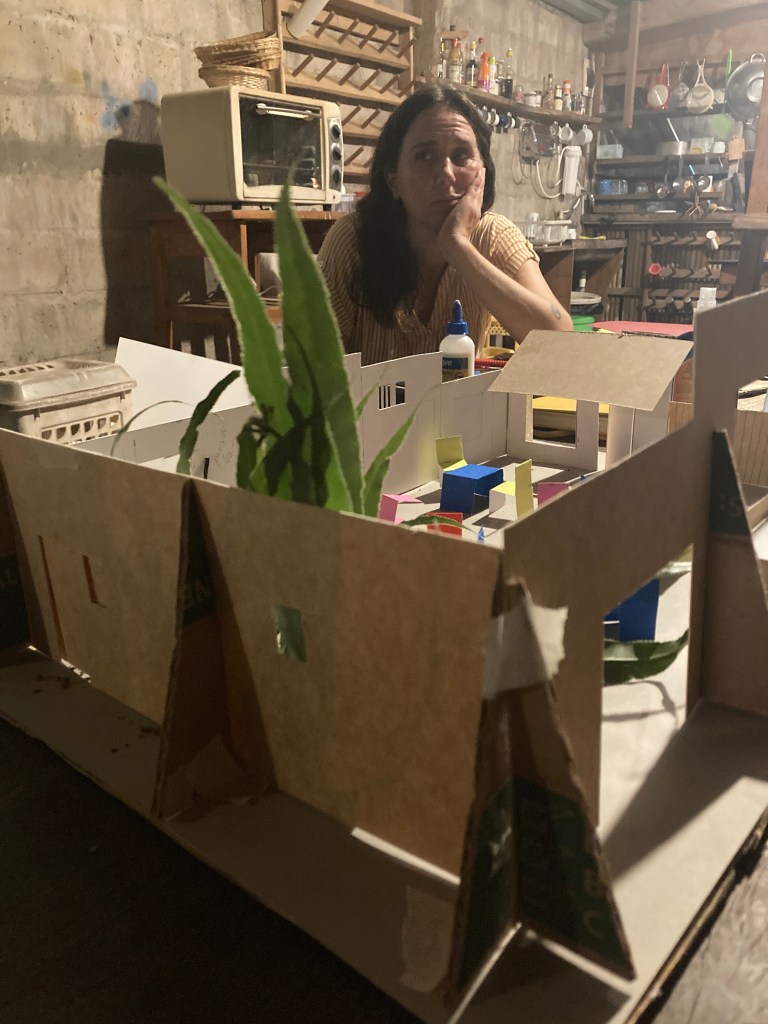
Johanna Mårtensson, Madre de Dios, Peru 2022
Scenography as a Collaborative Bridge: The Preventive Custody Project
The scenography for Preventive Custody emerged as an integral element in shaping the narrative framework for the project, serving both as a creative tool and a visual language that transcended linguistic barriers. Developed by scenographer Johanna Mårtensson, the scenography was instrumental in guiding the scriptwriters through the creative process of scriptwriting and storytelling.
In the initial stages of the project, Mårtensson joined the team in the jungle of Peru in September 2022, where she worked alongside the scriptwriters. While the language barrier presented a challenge, Mårtensson used her scenographic model to communicate visually, allowing the group to explore new possibilities for the stories they were creating. This shared visual language became a powerful tool, connecting the group and fostering a deeper engagement with their individual narratives.
The scenography became a shared space, reflecting the fragmented memories of the scriptwriters—memories of homes, objects, and places they had lost due to trafficking. Mårtensson incorporated the personal details of each of their lives into the scenographic landscape, from the texture of the walls in their childhood homes to the haunting presence of the bar where many of them had been forced to work. The scenography blended these elements, allowing the stories to coexist while maintaining their individuality.
In the second stage of the project, Sweden 2023, the scenography evolved as the scriptwriters continued to contribute to its construction. Their involvement extended beyond scriptwriting, as they worked closely with Mårtensson to bring their fragmented memories to life. This process resulted in a communal space where the personal stories of loss, hope, and resilience were physically represented on stage, with each narrative given a distinct yet interconnected place within the scenography.
This collaborative process intended to reaffirm the power of scenography not only as an artistic tool but also as a means of fostering shared understanding and emotional connection across cultural and linguistic divides.
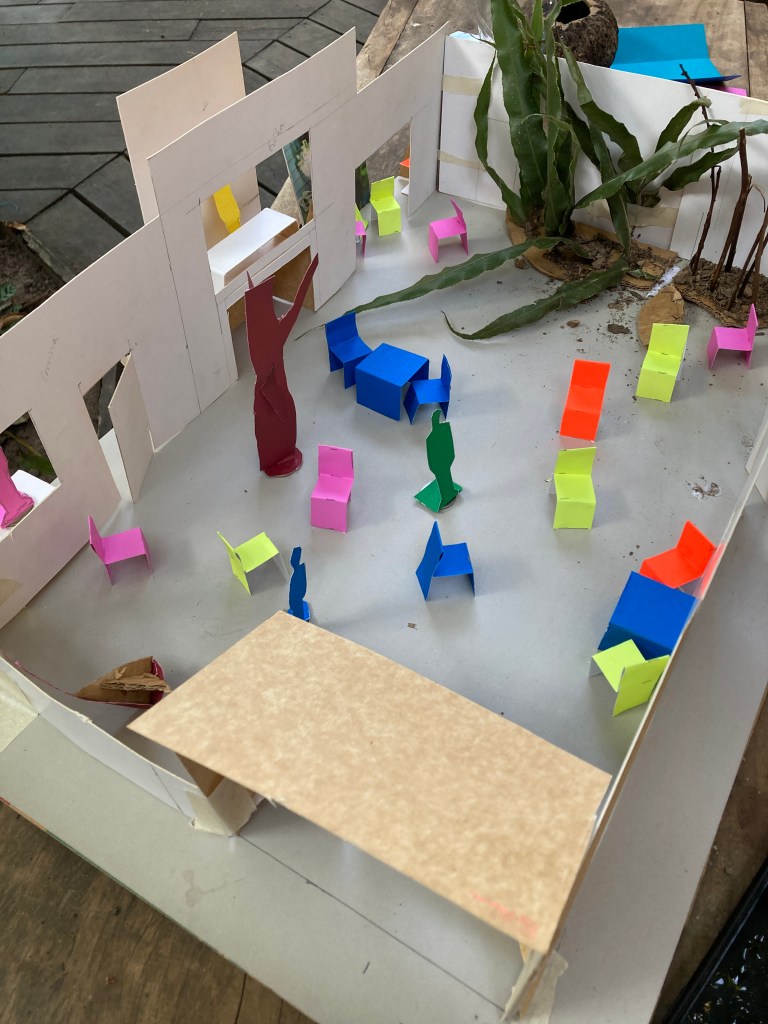
Scenography model, Madre de Dios, Peru 2022
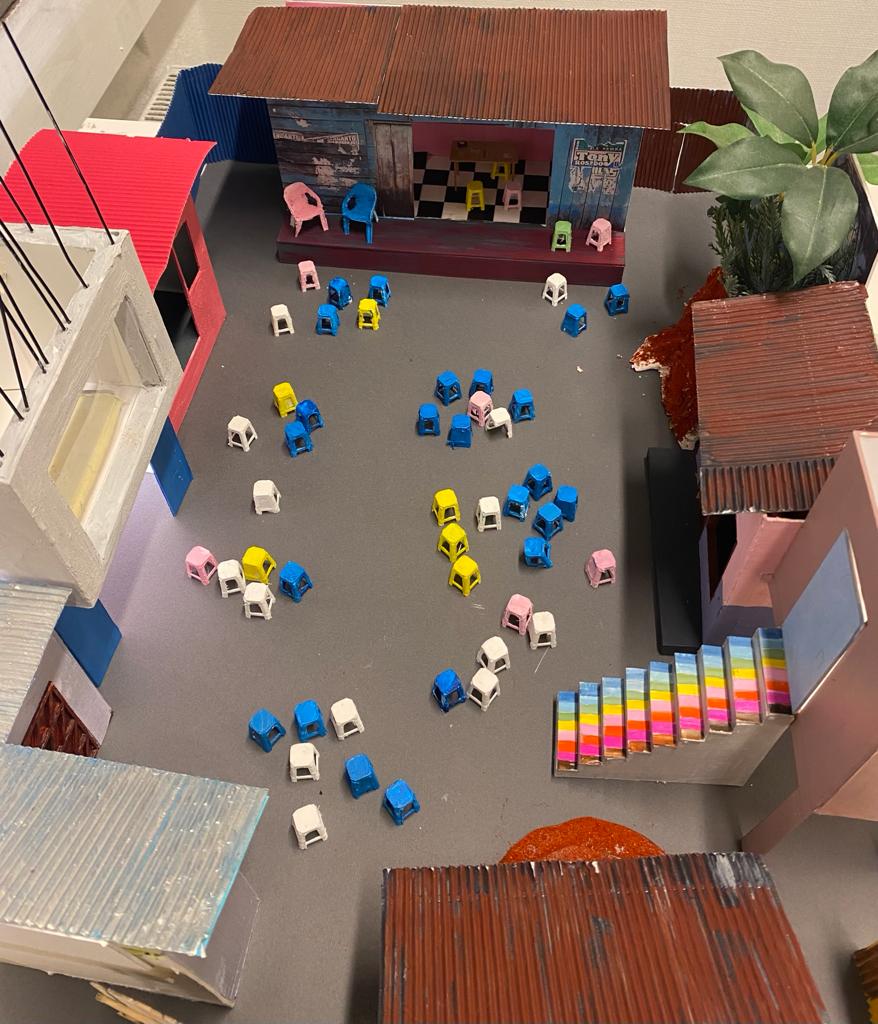
Scenography model, Stockholm, Sweden 2022
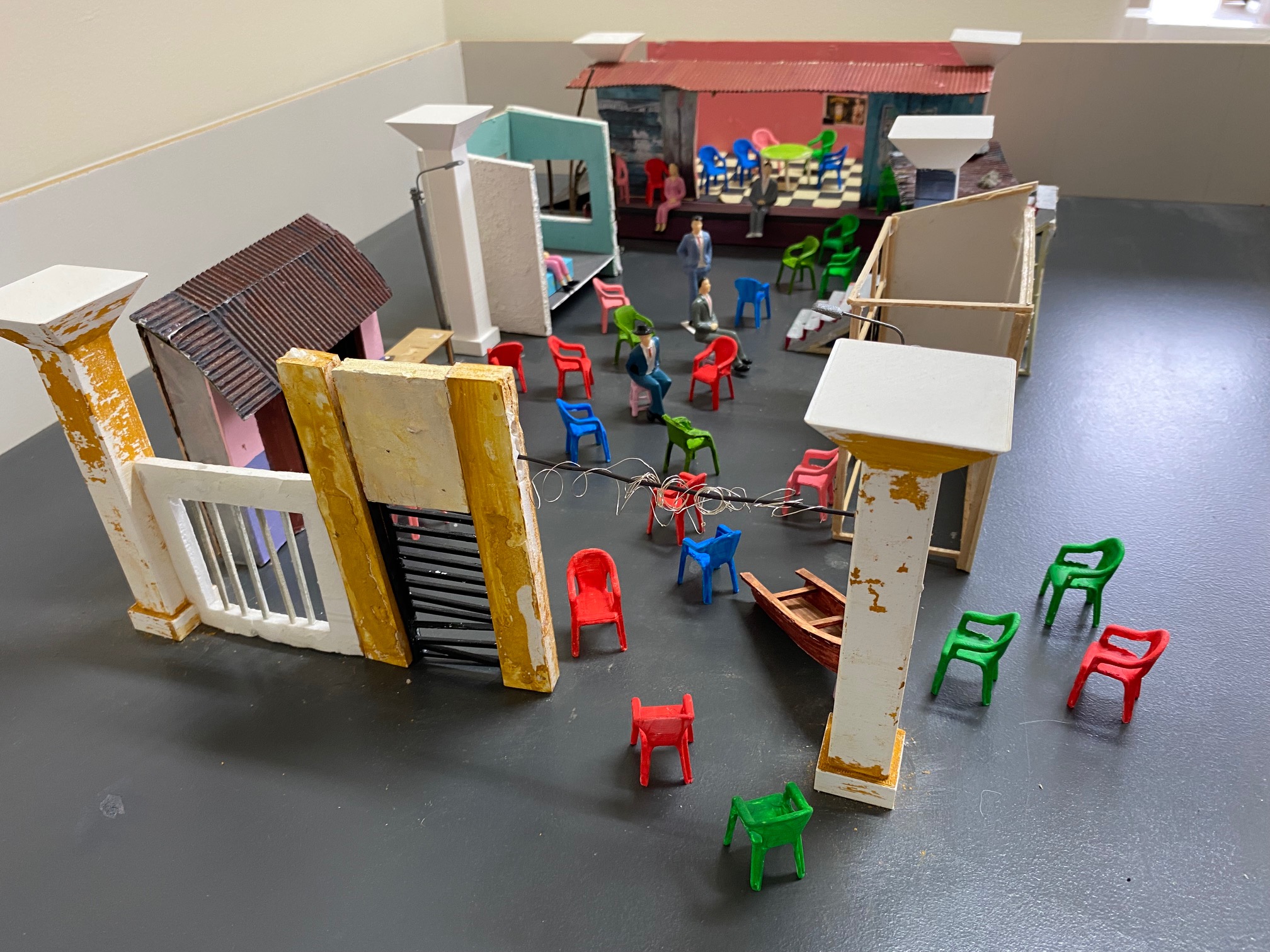
Scenography model for Tensta Konsthall, Stockholm, Sweden 2023
Mayra’s House
“I lived with a violent man who abused me, so I want the inside of the house to be brown, claustrophobic, and depressing, like it felt. The door that kept me locked in was heavy wood, brown. Inside, it’s messy, chaotic. The outside should represent freedom, with cheerful colors—purple and pink, like the sky sometimes looks—the lower part purple and the upper pink. A small terrace with flowerpots filled with beautiful flowers.”
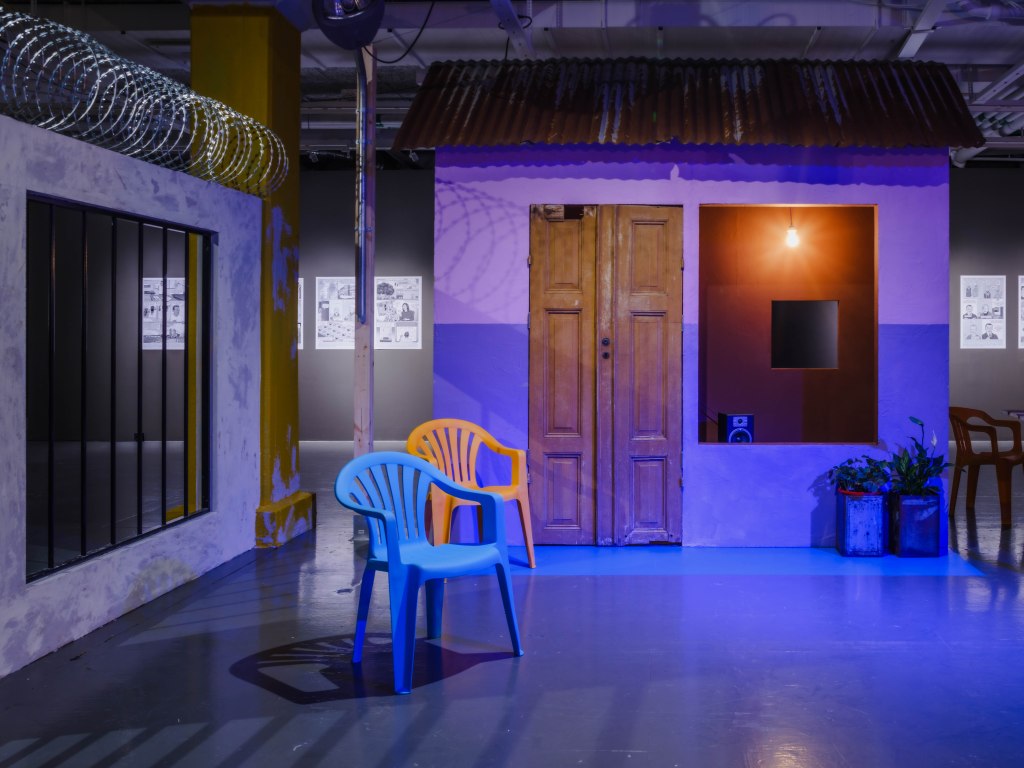
Photo ©Jean-Baptiste Béranger, 2023
Fortunata’s House
“A tiny mud house on the mountains that my father built. Dirt floors, with sticks on the façade to hang things on, shelves to place dishes on. No windows. A patched tin roof, old and rusty. Inside, hooks where my father hung his tools: a machete, an axe. Around the house grew avocados, coffee, tangerines, oranges, and bananas.”

Photo ©Jean-Baptiste Béranger, 2023
Corina’s House
“The house was covered with light lilac-gray tiles. The floor felt cold underfoot, with white porcelain tiles patterned with flowers. An iron door with a crisscross pattern— make a careful drawing of it. The sidewalk outside was brown, packed earth. By the house, there was a fish stall, always shouting ‘Pescado! Pescado!’ A small patio in front where children played. A gate made from old pallet wheels. Inside, there was a full-length mirror, a hammock, a TV to the left, and the cold light from a single bulb.”
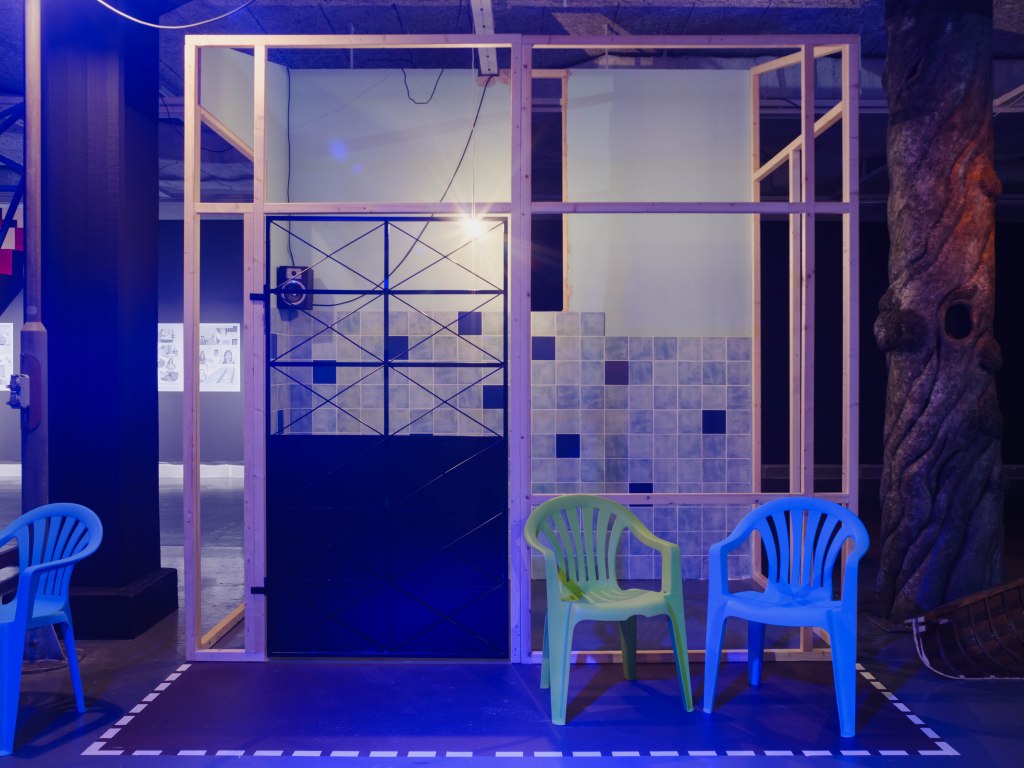
Photo ©Jean-Baptiste Béranger, 2023
Erika’s House
“No roof. Cement floor. A rug. A bed with a blue bedspread with tiny yellow stars on it. Above the bed, a framed Real Madrid Ronaldo T-shirt, in memory of my father, who loved football. The walls were light green—split vertically so half the room was green and half blue. Beige curtains. Outside the window, I want to honor my son with framed pictures surrounding it, and the words ‘Gareth Ronaldo’ painted below. My son is named after Ronaldo.”
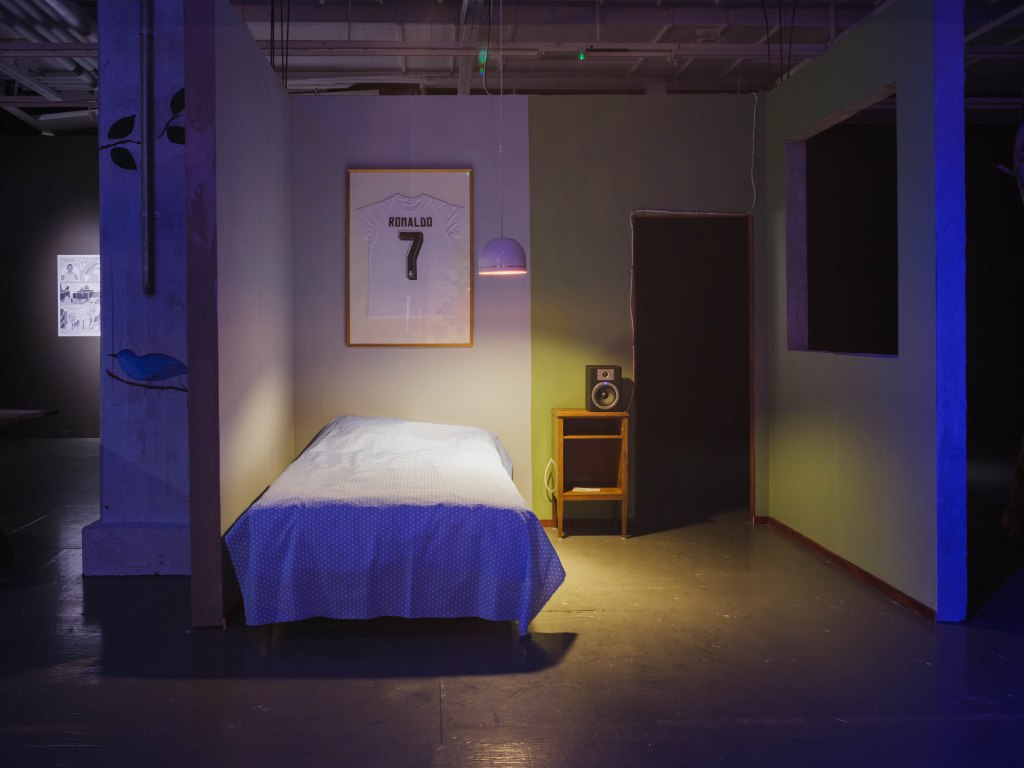
Photo ©Jean-Baptiste Béranger, 2023
Karla’s House
“My grandfather’s house is at the very top of the hills. A long concrete staircase with many steps, a blue railing tied with ropes. It takes about 25 minutes to reach the house. The house has a blue metal door with a tiny window, around 15×15 cm. Inside, it’s like a corridor with doors to many small rooms, all in light brown cement. There’s no roof in the corridor, but the bedrooms have roofs.”
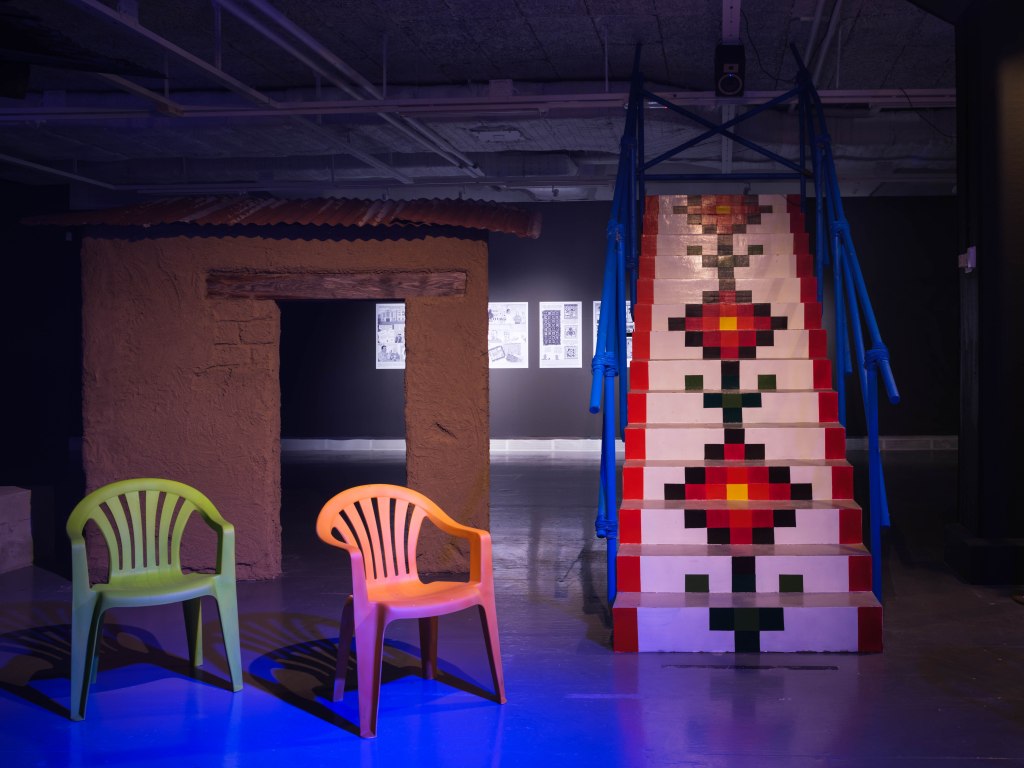
Photo ©Jean-Baptiste Béranger, 2023
Kathy’s Boat and Jungle
“A ‘peke-peke,’ a wooden boat made of dark wood with tar between the planks. A long, narrow boat, about 3 meters long. I brought food and a big bag of rice in a white sack. The boat’s engine sounded like it was calling out ‘Llevo-llevo’ (come with me). There was always a plate in the boat for scooping water to move faster; otherwise, it went at a sloth’s pace. The smell of the water was bad, with algae and rotting fish. At night, the birds sang.”
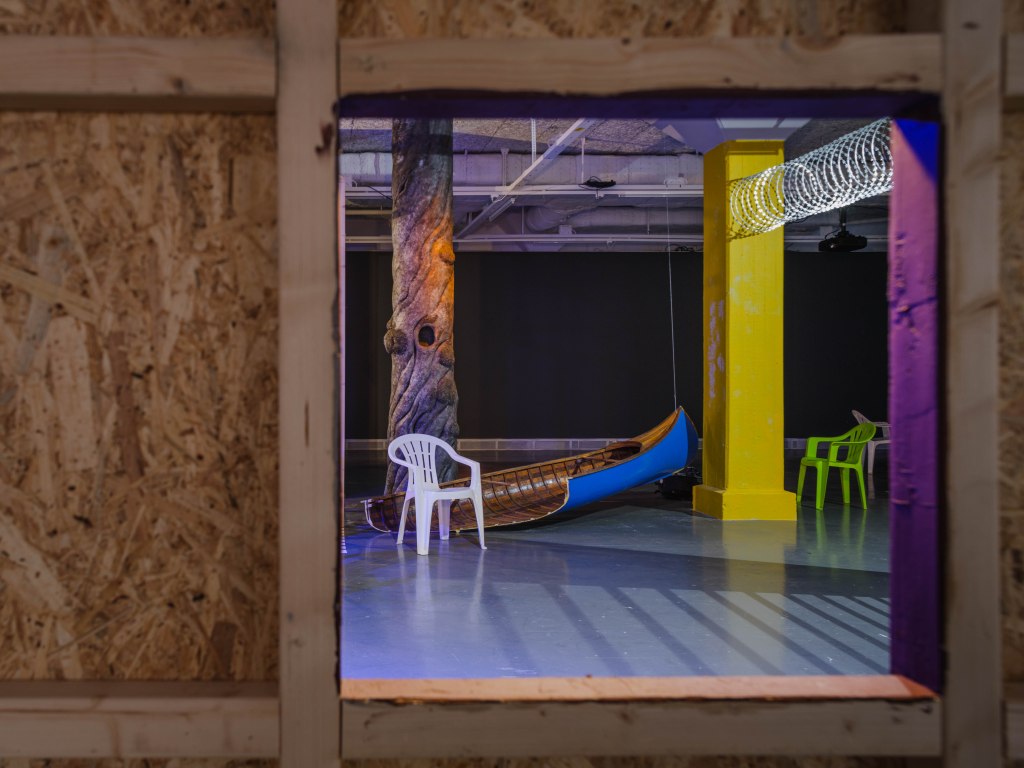
Photo ©Jean-Baptiste Béranger, 2023
The Prison
Mayra; “The cell is a concrete bunker with an iron door, two bunk beds. A window with iron bars. A small sink where you had to wash at 6 AM, then make the bed perfectly, or else… Inside the cell, there was a cross, a radio, and a Bible. There was also a chapel in the prison with an altar. When you enter the prison, you cling to your faith; you go mad without it. Surveillance cameras everywhere, constant radio noise, gates with locks, and slamming iron doors. Birds sometimes sang wildly when someone was about to be released.” […]
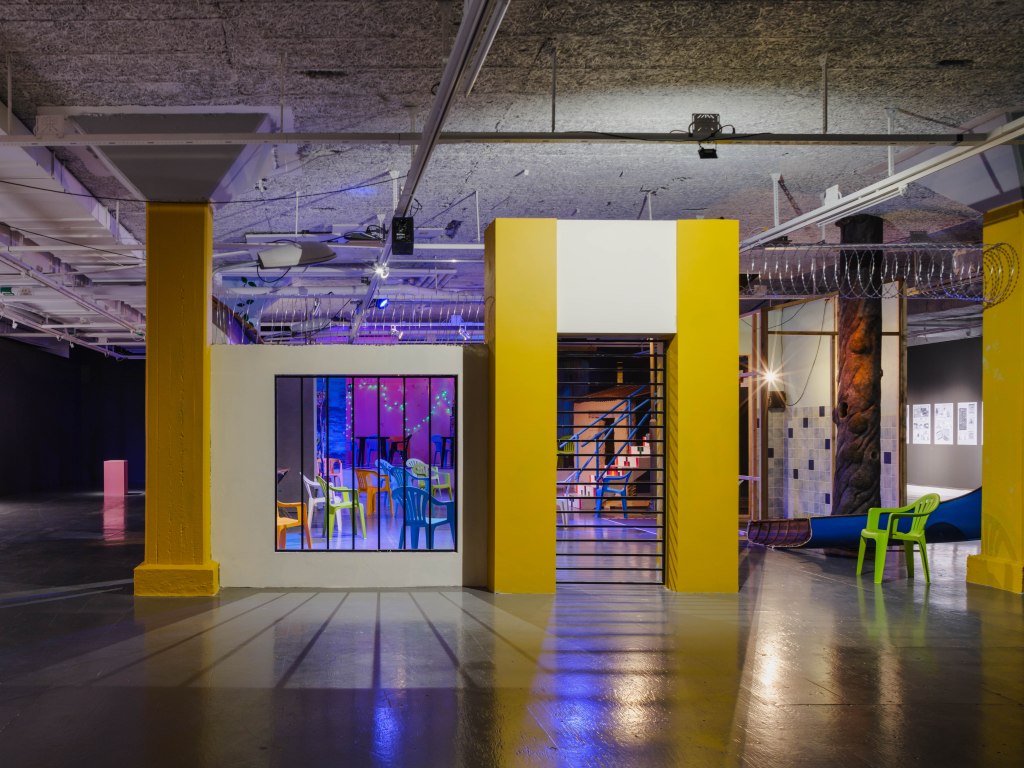
Photo ©Jean-Baptiste Béranger, 2023
The Bar
Erika: “There are lots of lights and sounds. A disco lamp that moves, flashing signs. A stereo. A fridge with a fan that always hums loudly but can suddenly go quiet. A laptop behind the bar playing music, where the customer chooses the songs. Beer glasses and bottles on wooden tables. Blue plastic chairs. A tiny private booth with a small table for customers who need to be discreet. The girls sit in a row on plastic chairs outside, waiting and smoking.”
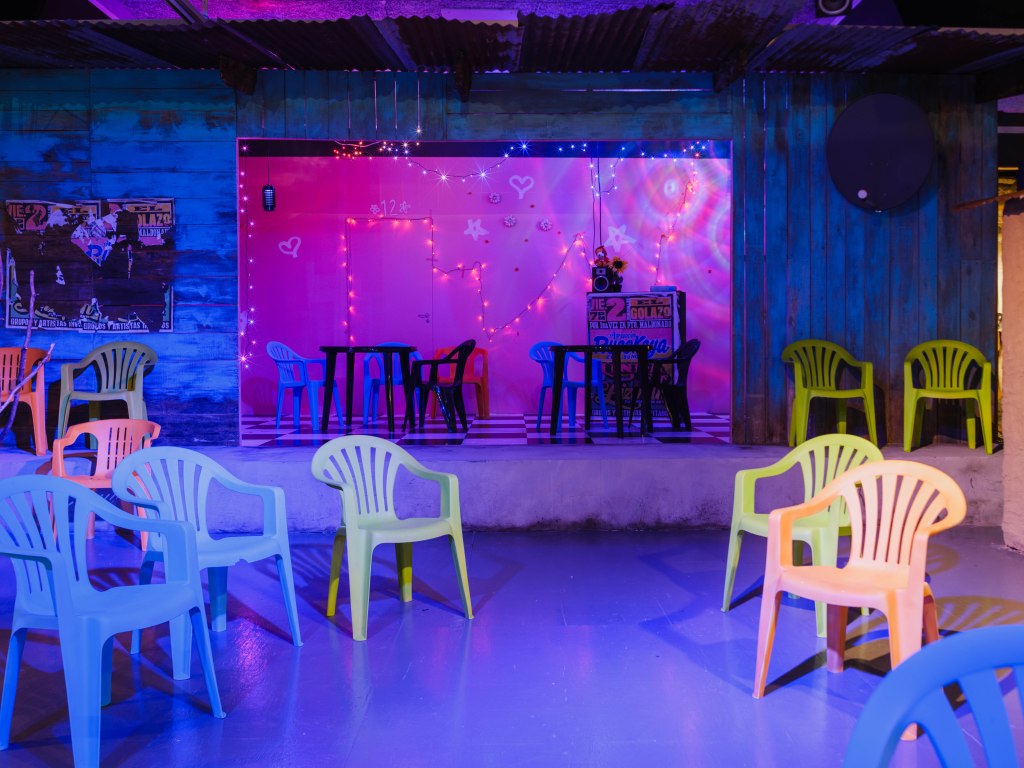
Photo ©Jean-Baptiste Béranger, 2023
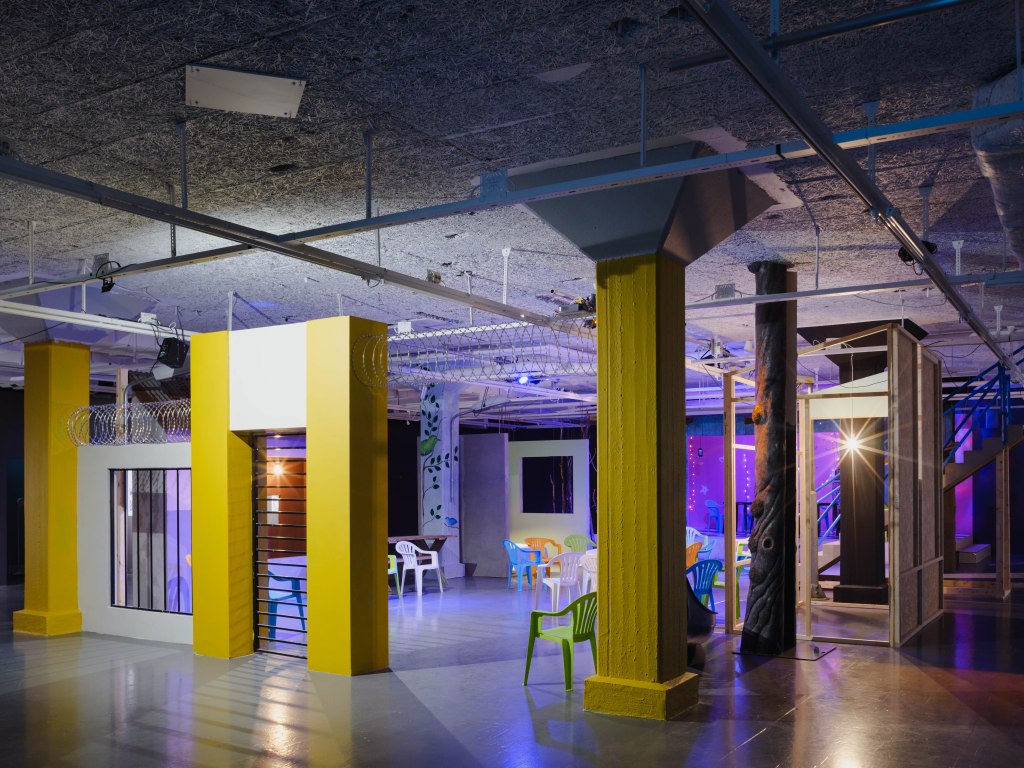
Scenography at the exhibition Mining Life, Tensta Konsthall, Stockholm, Sweden 2023
Photo ©Jean-Baptiste Béranger, 2023
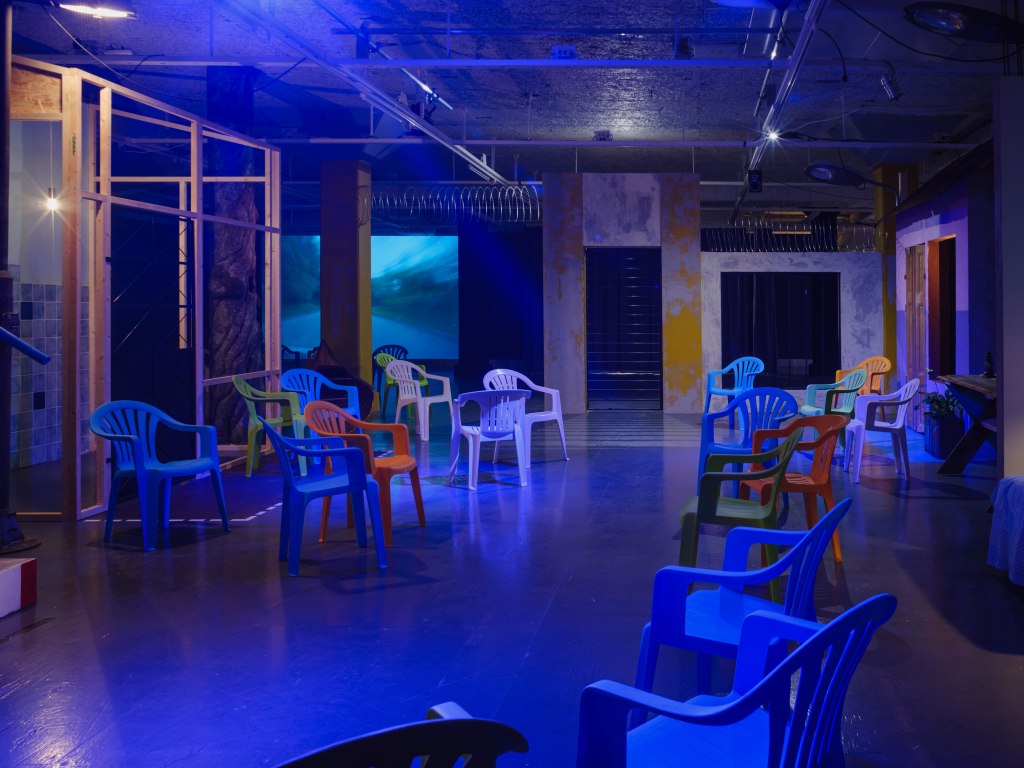
Scenography at the exhibition Mining Life, Tensta Konsthall, Stockholm, Sweden 2023
Photo ©Jean-Baptiste Béranger, 2023

Scenography at the exhibition Mining Life, Tensta Konsthall, Stockholm, Sweden 2023
Photo ©Jean-Baptiste Béranger, 2023
 Mining Life