Act 2: SEARCHING FOR POWER ON THE COLLECTIVE LAUGH
When I began working on Searching for Power on the Collective Laugh, I knew I was stepping into a world fraught with contradictions, injustice, and resilience. Unlike my first project, Within Heritage Movements, which focused on sociopolitical strategy and the structural impact of power dynamics, Searching for Power shifted the lens towards the collaborative platform and the creative dynamics within. It extended from post-colonial critique for structural change, incorporating necessary fluidity by allowing different voices to take on responsibility—the street comedians, the miners, and the researchers—who became the backbone of this work. The Amazonian region of Madre de Dios, with its beautiful landscapes scarred by the destructive forces of illegal and informal mining, seemed an apt metaphor for the dualities I wanted to explore. It is a place where hope and despair coexist, where survival requires navigating a system designed to exclude the very people who depend on the land.
At its inception, the project sought to merge creative experimentation with socio-political commentary. It drew from one of Lima’s most vibrant and accessible art forms—street comedy. The immediacy and flexibility of this medium offered a unique way to blend popular awareness with serious research on marginalization and power. Street comedy, often dismissed as shallow entertainment for the “illiterate masses,” became a tool for subversively introducing complex ideas about oppression, invisibility, and the systemic exploitation of informal workers.
The hypothesis that shaped this project emerged organically from a method focused on creative horizontality—an approach that blended elements of Augusto Boal’s Theatre of the Oppressed, fieldwork, and street comedy. The goal was to create a space where every voice in the team, from the Cómicos Ambulantes to academic collaborators, was heard and valued. This method not only allowed for collective input but also shaped the entire direction of the project in unexpected ways. We moved beyond simply illustrating the miners’ struggles; we found reflections of this exploitation in the lives of the street comedians themselves.
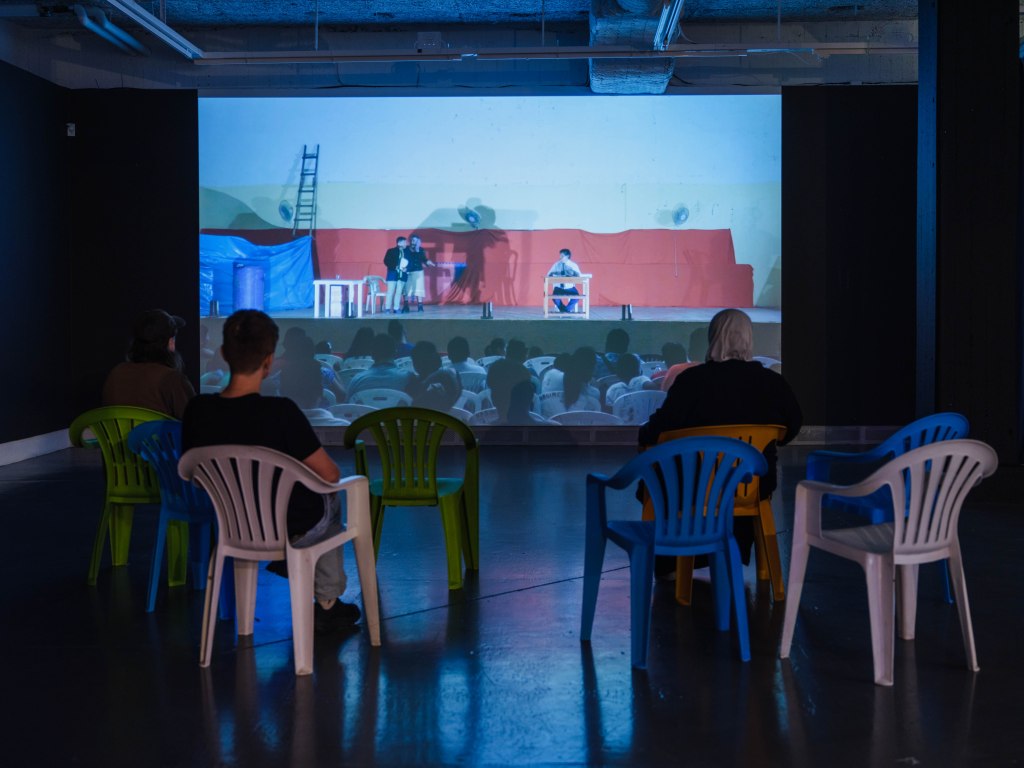
What I didn’t anticipate was how deeply personal this journey would become. Working closely with comedians like Kelvin Cordova, Koki Santa Cruz and Cholo Víctor, I witnessed first-hand how their daily struggles mirrored those of the miners in Madre de Dios. Despite their geographical and cultural distance, the systemic exploitation and marginalization they faced were eerily similar. As the project developed through workshops and improvisations, these comedians brought life to Chuchupe, a character who embodied the hope and despair of every miner seeking legal recognition. My role as a director shifted to that of a facilitator, as the project became a shared creation shaped by the lived experiences of all involved.
Throughout the process, I was tested both emotionally and artistically. There were moments of intense frustration, particularly when we encountered bureaucratic hurdles that echoed those in the script of Las Aventuras de Chuchupe. Yet, these challenges were tempered by moments of profound solidarity. The collaboration between street comedians and professional artists blurred traditional boundaries, creating a true sense of creative horizontality. While we touched upon Boal’s Theatre of the Oppressed, our approach was not strictly about following theoretical frameworks. Rather, it was about provoking empathy, outrage, and reflection in our audiences, inviting them to see themselves in the systems of oppression we were critiquing.
At the heart of this project is resilience. The resilience of miners fighting for their rights. The resilience of comedians using laughter as a form of resistance. And my own resilience as an artist, committed to providing a platform for marginalized voices. This emotional journey was not just about creating art; it was about challenging systemic injustices and re-imagining the role of artistic practice in social transformation.
A project in collaboration with: Gabriel Arriarán, researcher Victor Astete, street comedian Kelvin Cordova, street comedian Antonio Fernandini, biologist & conservationist Ricardo Galvez, Theatre of the Oppressed facilitator Carlos Hidalgo, street comedian Jorge Santa Cruz, street comedian
Production: Sergio Ayala, filmmaker Daniel Thissen, filmmaker
Advisors: Jorge Acuña Paredes, artist, actor and mime Christian Islas, actor and theatre director Miguel Rubio, director of the theatre group Yuyackhany
Other contributors: Arabela Bartra Mujica, deputy manager, Minicipalidad de Lima Jose Luis Herrera, director of Barranco Open Studios Cecilia Moron Gaultier, director of the cultural center El Fauno Ximena Arroyo, director of the theatre AAA
Supported by: AAA – Asociación de Artistas Aficionados, Lima Peru Taller Grau, Lima Peru
Produced with finantial support from the Royal Institute of Art in Stockholm and Dirección de las Artes, Ministry of Culture of Peru.


 Mining Life