Act 3: Preventive Custody
3.2 Comadres de Dios – The Script
[Sisters of God]
Narrated by Erika Lima Mamani
Fortunata Panihuara Cordova
Karla Toscano Requena
Corina Lozano Tuanama
Mayra Basos Garcia
Catalina Pinedo Valles
Dramatised by E-M Benavente Dahlin
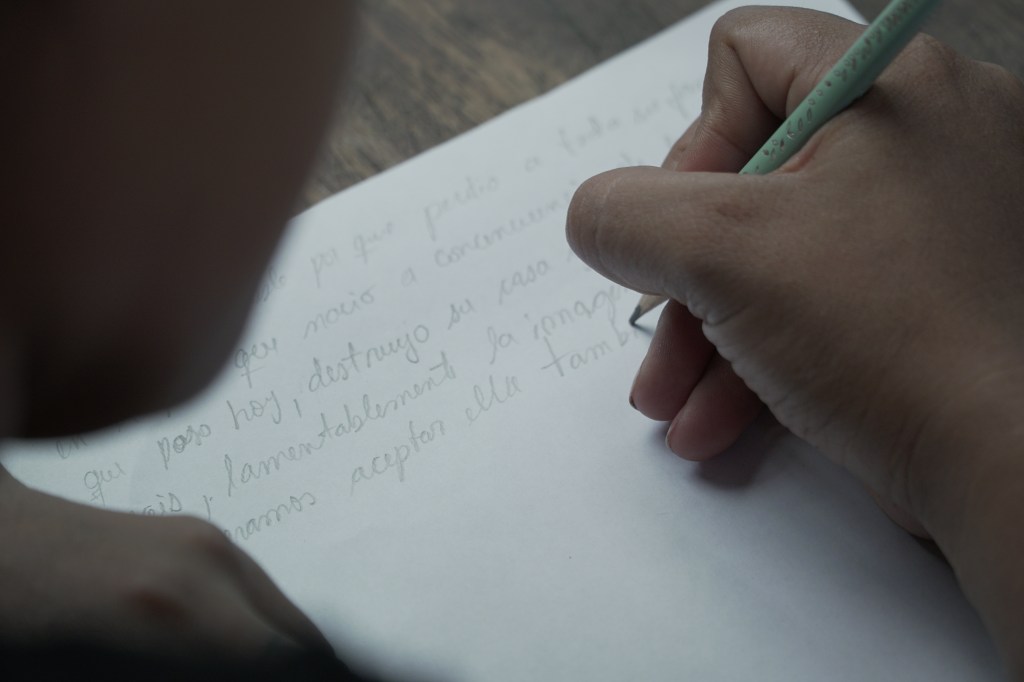

Script, Empowerment Through Creative Freedom
The creation of the theatre script for Preventive Custody was a deeply collaborative and empowering process, emphasizing the creative freedom of six women—called from now scriptwriters—from Madre de Dios, Peru. These scriptwriters, who had been caught in the exploitative network of human trafficking connected to illegal gold mining, were invited not just to tell their stories but to create a theatrical script about whatever they wished. This freedom, central to the project’s strategy, positioned them as the creative masterminds, breaking traditional cultural power dynamics.
Stage 1: Invitation and Creative Freedom in Madre de Dios
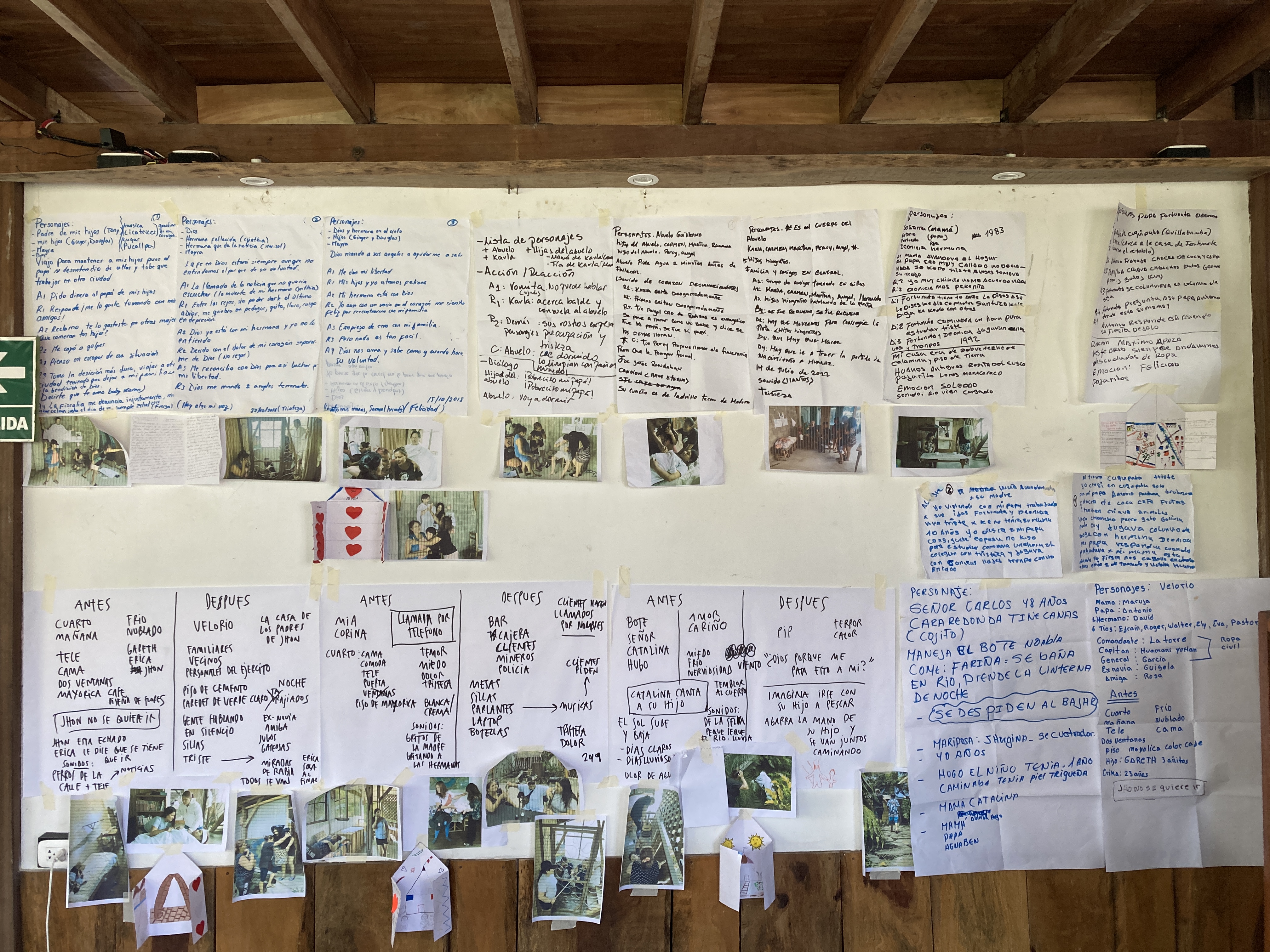
From the outset, the scriptwriters were offered complete control over the script’s content. They could have written about anything—fantastical worlds, flying horses, or invented narratives. The project’s fundamental goal was to shift the creative power to the scriptwriters, allowing them to explore their own imaginations and choose the stories they wanted to tell. The facilitators—Eva-Maria Dahlin, Johanna Mårtensson, Gabriel Arriarán, Ricardo Galvez and myself—provided narrative-building exercises and strategies aimed at encouraging them to experiment with fiction or alternative narratives.
However, despite being given the freedom to explore any theme, they consistently returned to their own lives. They chose to focus on key moments of trauma and points of no return—events that had fundamentally altered their life paths. This decision was entirely theirs, and while the facilitators offered multiple options for fictionalizing their stories, the scriptwriters ultimately felt compelled to recount their personal experiences.[…]
Fictionalization and Return to Reality
Eva-Maria Dahlin and Gabriel Arriaráns’ narrative exercises encouraged the participants to consider different possibilities in storytelling, such as creating fictional characters or scenarios. These exercises were designed to give them the freedom to step away from their personal traumas. Yet, each time, the scriptwriters chose to return to their own stories of trauma, hardship, and resilience. Despite the invitation to write about fantastical or unrelated topics, they found it essential to explore and process the pivotal moments in their lives that had defined who they were.
This pattern of returning to personal narratives underscores the importance of their agency in the project. The scriptwriters were positioned as the creative decision-makers, and while the facilitators were there to offer tools and guidance, the content of the script was entirely their choice.
Stage 2: Refining the Script in Sweden
After their initial work in Peru, the scriptwriters—four of them—travelled to Sweden in 2023 to refine their script and for this, a group of five Swedish actors was added to the team. They were again encouraged to explore different narrative structures and storytelling techniques. The actors, many of whom had backgrounds connected to Latin America, helped expand and refine the emotional depth of the stories while maintaining the scriptwriters‘ ownership of the content.
This collaborative editing process further highlighted the scriptwriters‘ commitment to telling their personal stories. Despite working with professional actors and engaging in narrative exercises designed to stimulate creative thinking, the scriptwriters remained steadfast in recounting the moments that had shaped their lives.[…]
 Mining Life